Concrete contractor
Concrete work for homes across Paradise Valley, Scottsdale, and Phoenix.
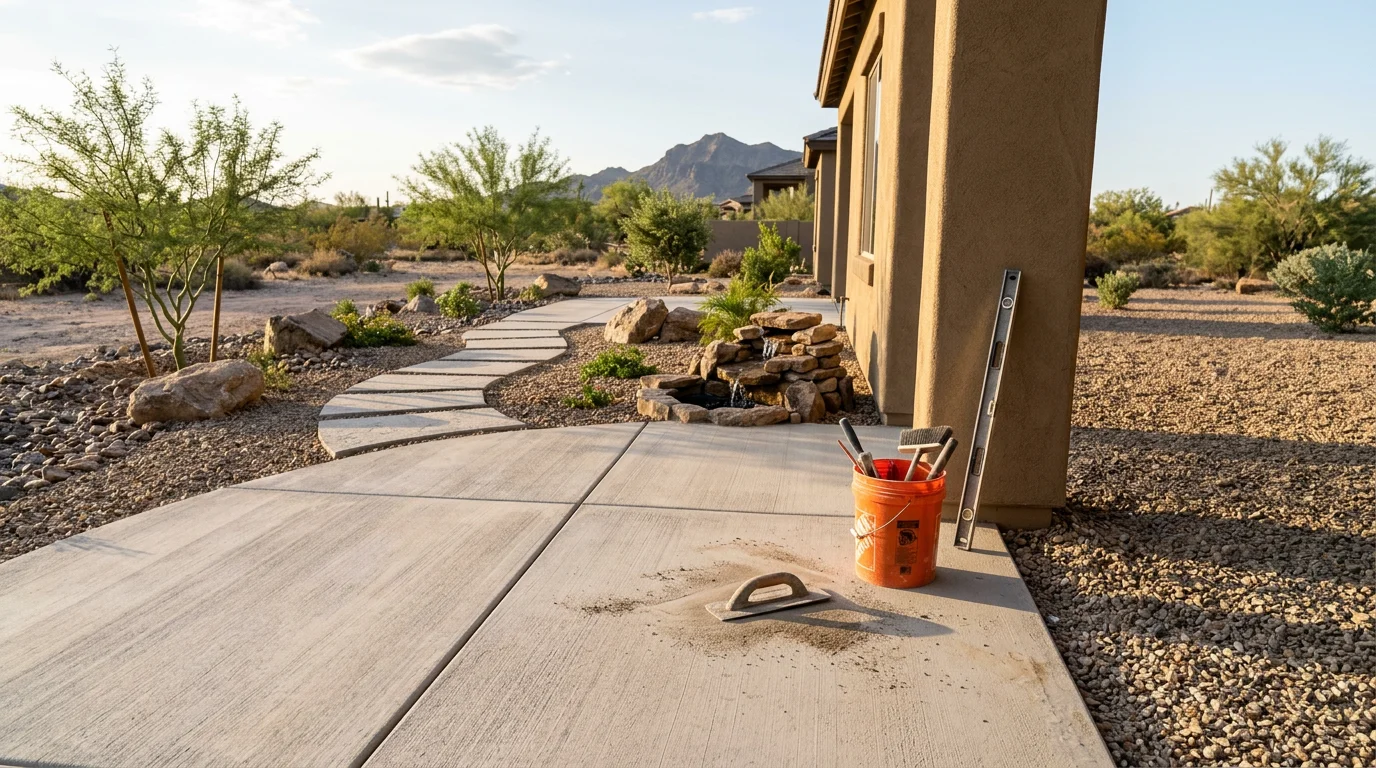
- Concrete sidewalk building
- Concrete footings
- Driveway installation
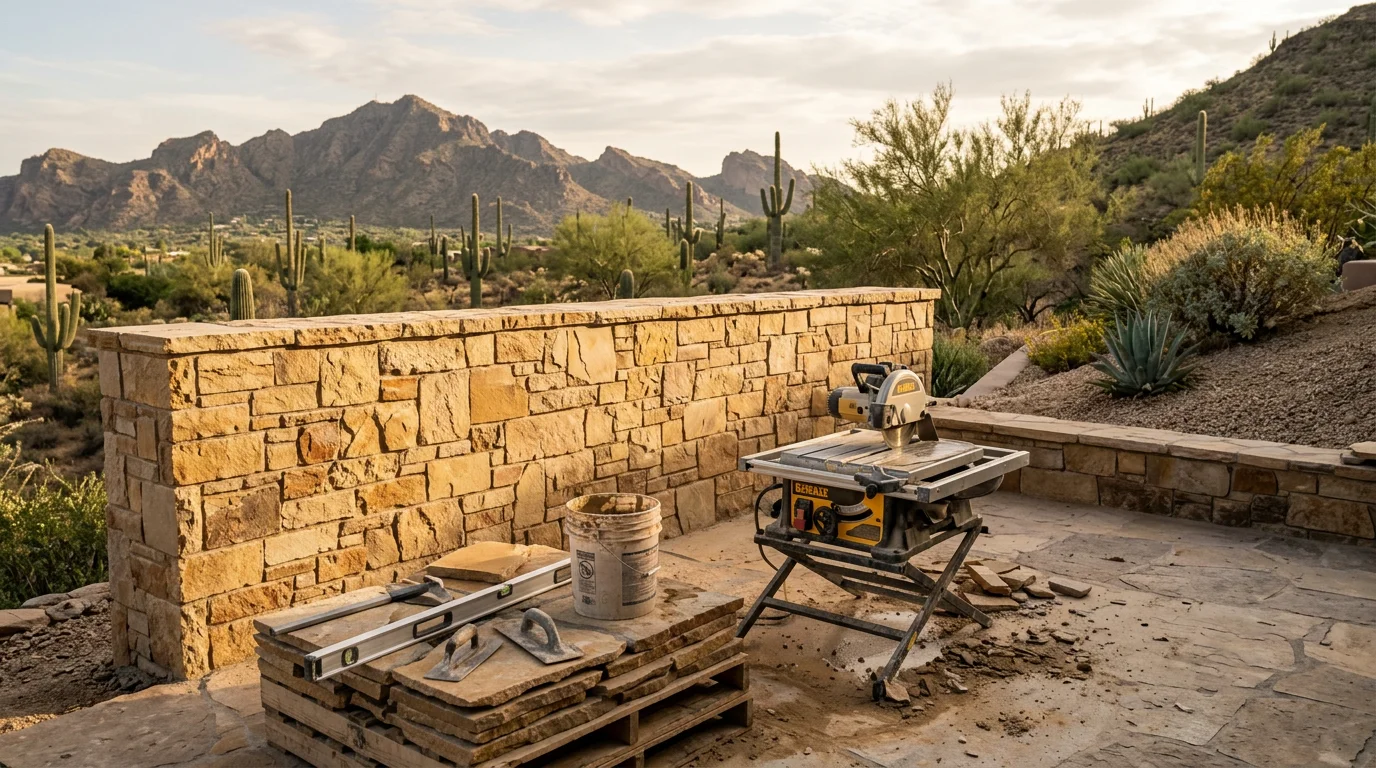
- Concrete masonry
- New construction services
Phoenix covers a wide range of residential conditions, from the mature citrus-grove lots of Arcadia near Camelback Mountain to the master-planned newer construction of Desert Ridge in the northeast and the hillside suburban neighborhoods of Ahwatukee Foothills at the base of South Mountain. Across most of the city, caliche hardpan sits beneath the topsoil — a dense calcium layer that blocks drainage and makes base preparation for hardscape more involved than it appears on the surface. Clay-heavy soil in many central and south Phoenix neighborhoods expands when wet and contracts when dry, which causes paver and concrete surfaces to shift if the base is not built to account for that movement. Monsoon storms deliver intense, short-duration rainfall that overwhelms unprepared drainage on both flat and sloped lots.
Phoenix, AZ
AZ Service Area
Communities we serve
Phoenix, AZ
Landscaper
Caliche is a cemented calcium layer found beneath the topsoil across most Phoenix neighborhoods. It blocks drainage and prevents a properly compacted base from forming if it is not broken up or designed around before hardscape installation begins. In areas like Arcadia and central Phoenix, that caliche layer can appear within 12 to 18 inches of the surface, which means base preparation is not optional — it is the difference between a paver surface that stays level and one that shifts within two seasons.
Phoenix's clay-heavy soil in central and south neighborhoods expands when it absorbs monsoon moisture and contracts as it dries out in the summer heat. That cycle of expansion and contraction puts stress on any rigid surface installed above it. Paver and travertine installations built on a base that accounts for this soil movement stay level and properly drained over time. Installations that ignore it develop low spots, lifted edges, and drainage problems that worsen each monsoon season.
Arcadia's large lots developed on former citrus groves carry mature trees and flood irrigation infrastructure that affects how hardscape and drainage are designed. Desert Ridge's newer master-planned construction from the late 1990s onward sits on shallower topsoil with different drainage characteristics. Ahwatukee Foothills properties at the base of South Mountain deal with rocky terrain similar to the foothills communities to the north. Each Phoenix neighborhood presents its own specific conditions, and the build approach reflects those conditions.
At a glance
Hardscaping, driveway installation, and yard drainage are the highest-demand services across Phoenix, where caliche soil and monsoon runoff create conditions that require proper base preparation and drainage planning on every project. Artificial turf installation is popular across Phoenix neighborhoods as a water-efficient alternative to natural grass that holds up through triple-digit summer heat. Desert landscaping and sod installation are both in demand depending on the neighborhood and lot type, with Arcadia's large lots often supporting sod and the newer Desert Ridge communities leaning toward desert-adapted designs. Concrete sidewalk building, walkway paving, and outdoor step construction round out the common work across Phoenix's varied housing stock.
Concrete work for homes across Paradise Valley, Scottsdale, and Phoenix.
Brick, block, stone, and custom masonry for Phoenix-area homes.
Yard, drainage, and turf services for Greater Phoenix homeowners.
Custom landscape design and outdoor planning for Scottsdale and Paradise Valley homes.
Paradise Valley construction company specializing in custom concrete patio construction.
Worked with us?
Leave a ReviewWorked with us?
Leave a ReviewNo qualifying reviews with text to display yet (only 4+ star reviews with a written comment are shown).
 Masonry contractor
 Landscaper
 Concrete contractor
Serving Phoenix, AZ
Our crew knows Phoenix, AZ. We will show up on time, assess the job honestly, and give you a clear written number before asking you to decide anything.
Also serving across Greater Phoenix:
Common questions from Phoenix, AZ customers about our services, process, and coverage.
The most common cause is a base that was not built to account for Phoenix's caliche hardpan and clay soil. Caliche blocks drainage, and clay soil expands and contracts with moisture changes through monsoon season and summer heat. When the base is not compacted and engineered to handle that movement, the pavers above it shift and settle unevenly. Proper base preparation — including breaking up or designing around the caliche layer — is what keeps a paver surface stable long-term.
Yard drainage in Phoenix needs to direct monsoon runoff away from the home's foundation and off the property without pooling on the surface. French drains, dry creek beds, catch basins, and regrading are the most common solutions depending on the lot's grade and soil conditions. The clay-heavy soil in many Phoenix neighborhoods does not absorb water quickly, so surface drainage design matters as much as underground drainage infrastructure.
Artificial turf works well in both Arcadia and Ahwatukee backyards, though the installation approach differs. Arcadia's larger lots with flood irrigation history may require more base preparation to ensure proper drainage beneath the turf. Ahwatukee's rockier terrain near South Mountain needs a base built to stay level on a surface that is less uniform than flat Valley soil. In both cases, the turf holds up through Phoenix's summer heat without the irrigation demand of natural grass.
Yes, and paver driveways handle Phoenix's heat cycling better than poured concrete slabs because individual pavers can flex slightly with soil movement rather than cracking across the full surface. Concrete slabs in Phoenix neighborhoods built in the 1970s through 1990s commonly show cracking and lifting from decades of thermal expansion and caliche-related drainage issues. Paver replacement addresses both the aesthetic and the underlying drainage and base problems that caused the original concrete to fail.
Desert landscaping with Sonoran Desert-adapted plants, decomposed granite, and rock ground cover is the most durable approach for Phoenix backyards that receive full sun through the summer. These plants are selected to thrive in alkaline soil and minimal rainfall once established, and they require far less irrigation than non-native species. Pairing desert landscaping with a properly designed drip irrigation system gives the plants what they need to establish without overwatering, which is the most common cause of plant failure in Phoenix's alkaline soil.
Call us directly. Real answers, no scripts.
Stop by, call, or book online — we're always nearby when you need us.
Phone
(623) 670-6596Hours